Real-Time Automotive Repair Tracking Platform
A two-sided service operations system that connects vehicle owners and automotive repair teams through a shared real-time repair state model, reducing communication overhead, improving repair transparency, and streamlining workshop workflows.

PRODUCT CONTEXT
Automotive repair is not just a service problem—it is a coordination and information asymmetry problem.
Customers lack visibility into what is happening after vehicle drop-off, while repair teams operate under constant interruptions from status inquiries, manual updates, and fragmented communication channels.
This creates a broken feedback loop between work being done and work being understood.
PROBLEM
Through research with vehicle owners and repair staff, I identified a core systemic issue:
Repair shops and customers operate on two disconnected versions of the same workflow.
Anxiety due to uncertainty
Reliance on phone calls for updates
Surprise costs and unclear timelines
No visibility into repair progress
Customer Experience Issues
Time lost repeating updates
Manual estimate communication
Fragmented repair documentation
Frequent interruptions from status inquiries
Operational Issues (Repair Teams)
OPPORTUNITY
How might we design a shared operational system where both customers and repair teams interact with a single, synchronized repair state?
SOLUTION
This is a real-time repair operations platform built around a unified repair state system.
It consists of two interconnected interfaces:
A transparent interface that allows customers to:
Track real-time repair progress
Review repair milestones
Approve digital estimates
View repair documentation (photos + notes)
Communicate with service teams
Access full vehicle service history
1. Customer Experience Layer
An internal workflow system that enables repair teams to:
Manage repair queue
Update repair stages in real time
Attach repair evidence (photos, notes)
Generate and send estimates
Communicate with customers
Track job progression across workshop capacity
2.Repair Operations Layer (Mechanic Dashboard)
Instead of designing two separate apps, I designed a shared state architecture:
Every action in the mechanic dashboard updates a single source of truth that powers the customer experience in real time.
SYSTEM DESIGN THINKING
Mechanic Action
↓
Repair State Update (Database)
↓
Real-Time Sync Layer
↓
Customer Experience UI
↓
Customer Awareness + Feedback
This ensures both users are always interacting with the same version of reality.
SYSTEM MODEL
PRODUCT STRATEGY
This platform was designed around three core principles:
Customers should never need to “ask” for updates.
1. Transparency by Default
Mechanics should never be interrupted to communicate status updates manually.
2. Workflow Continuity
Visual repair documentation reduces uncertainty and increases estimate approval confidence.
3. Trust Through Evidence
RESEARCH
Workflow interviews (technicians + service advisors)
User interviews (vehicle owners)
Competitive analysis
Service journey mapping
Methodology
The key design challenge was balancing:
Technical workflow complexity (repair operations)
Emotional clarity (customer experience)
Speed of interaction (mechanic efficiency)
This required designing for two completely different mental models within a single system.
DESIGN CHALLENGE
KEY PRODUCT DECISIONS (TRADEOFFS)
Decision:
I chose a linear repair timeline model instead of just list-based task system.
Why:
Repairs follow predictable stages
Customers need clarity, not complexity
Linear structure reduces cognitive load
Tradeoff:
Less flexibility for edge-case repair flows
1. Timeline vs List-Based Status System
Decision:
Implemented real-time state synchronization between dashboard and customer portal.
Why:
Eliminates communication delays
Reduces customer uncertainty
Removes manual refresh dependency
Tradeoff:
Higher system complexity and dependency on reliable syncing
2. Real-Time Updates vs Manual Refresh
Decision:
Built mechanic dashboard as the primary control system, with customer UI as a reflection layer.
Why:
Operational accuracy depends on technician input
Customer experience must mirror real operational state
Tradeoff:
Customer experience is dependent on backend discipline
3. Dashboard-First vs Customer-First Architecture
INFORMATION ARCHITECTURE
Home (Repair Overview)
Live Repair Status
Estimates & Approvals
Messages
Repair History
Customer Portal 1
Active Repair Queue
Job Detail View
Status Management System
Estimate Builder
Communication Hub
Workshop Overview
Repair Operations Dashboard
DESIGN SYSTEM

Primary Color
#F53838 → Trust, control, system clarity
Secondary Color
#FFFFFF → Progress, completion, approval
Neutral Base
#000000→ Operational clarity and focus
USER FLOW
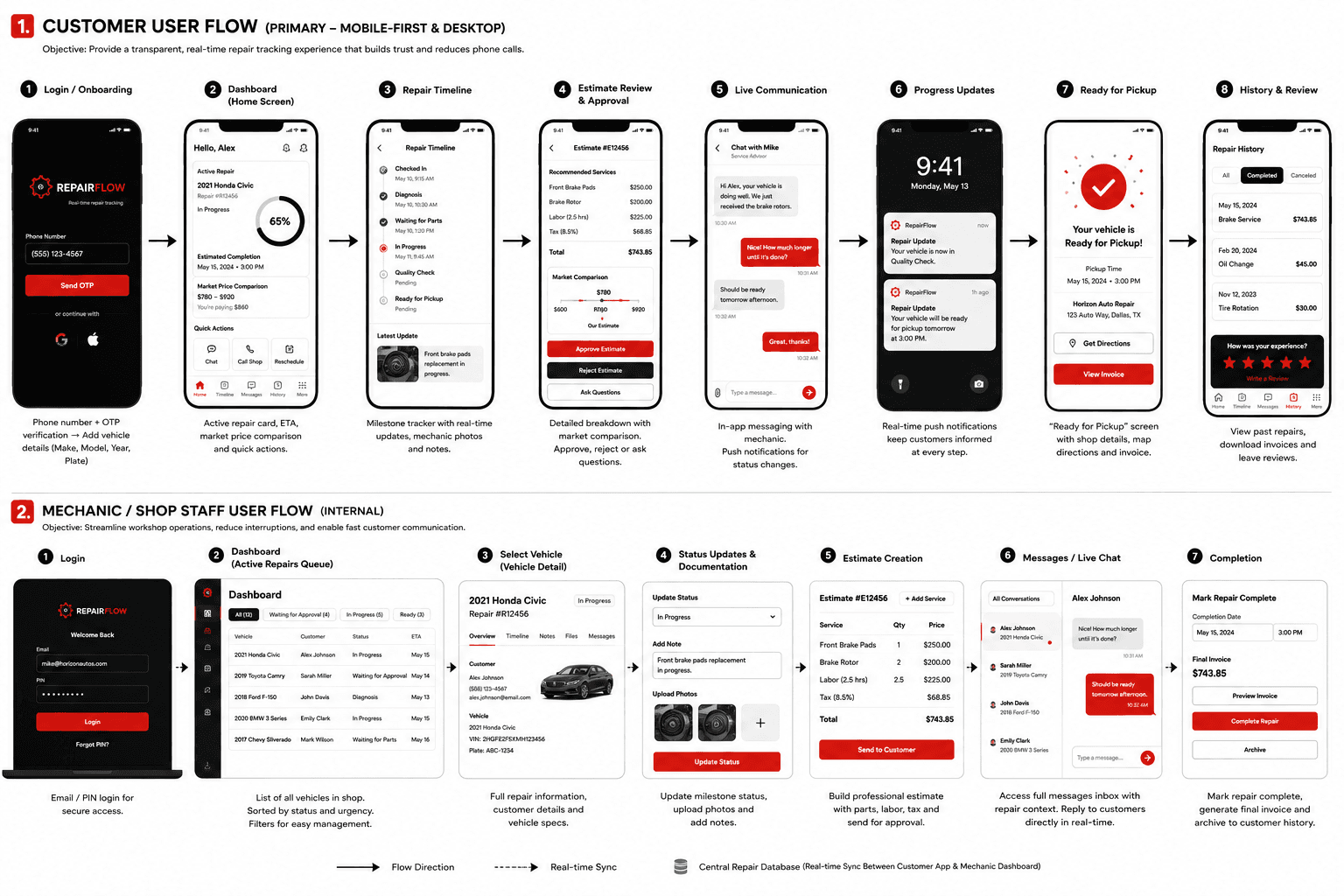
The Customer User Flow follows a linear journey from phone-based login to repair completion, emphasizing real-time transparency, digital estimate approval, and seamless communication to reduce uncertainty and phone calls.
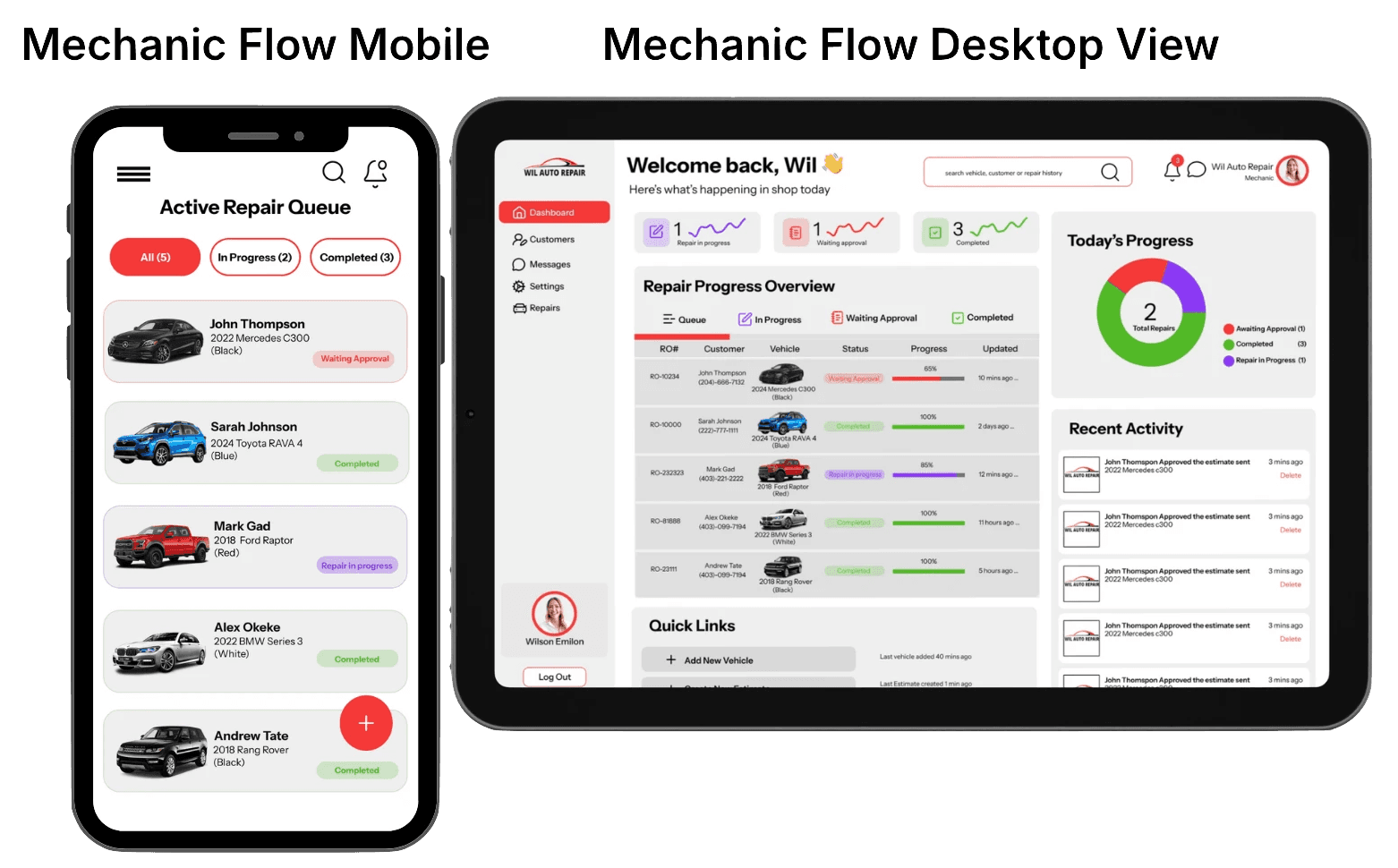
The Mechanic User Flow is designed for operational efficiency, enabling shop staff to quickly manage active repairs, update statuses, upload documentation, send estimates, and communicate with customers from a centralized dashboard and messaging system.
KEY FEATURES
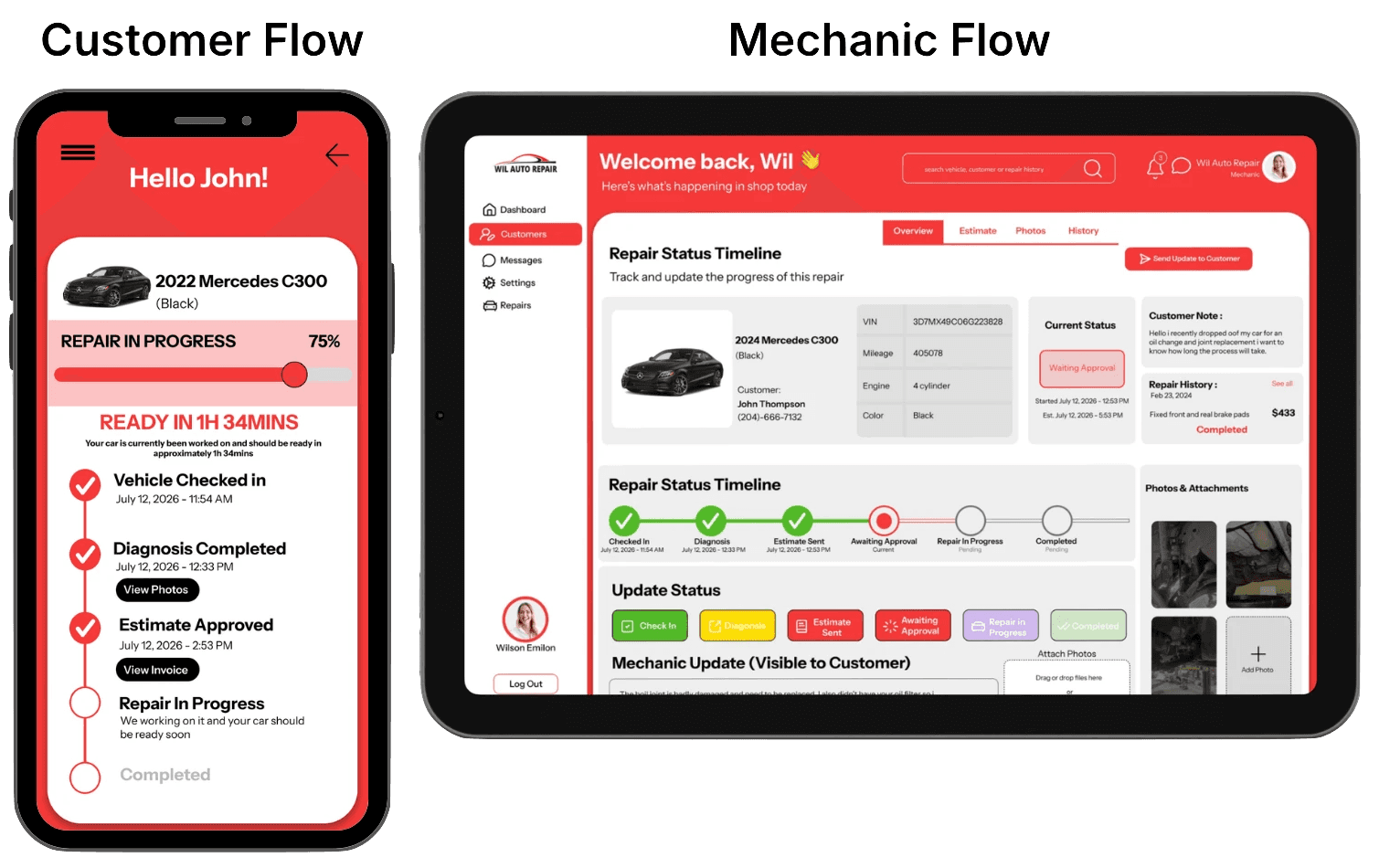
1. Real-Time Repair State System
A synchronized status engine that updates both customer and mechanic views simultaneously.
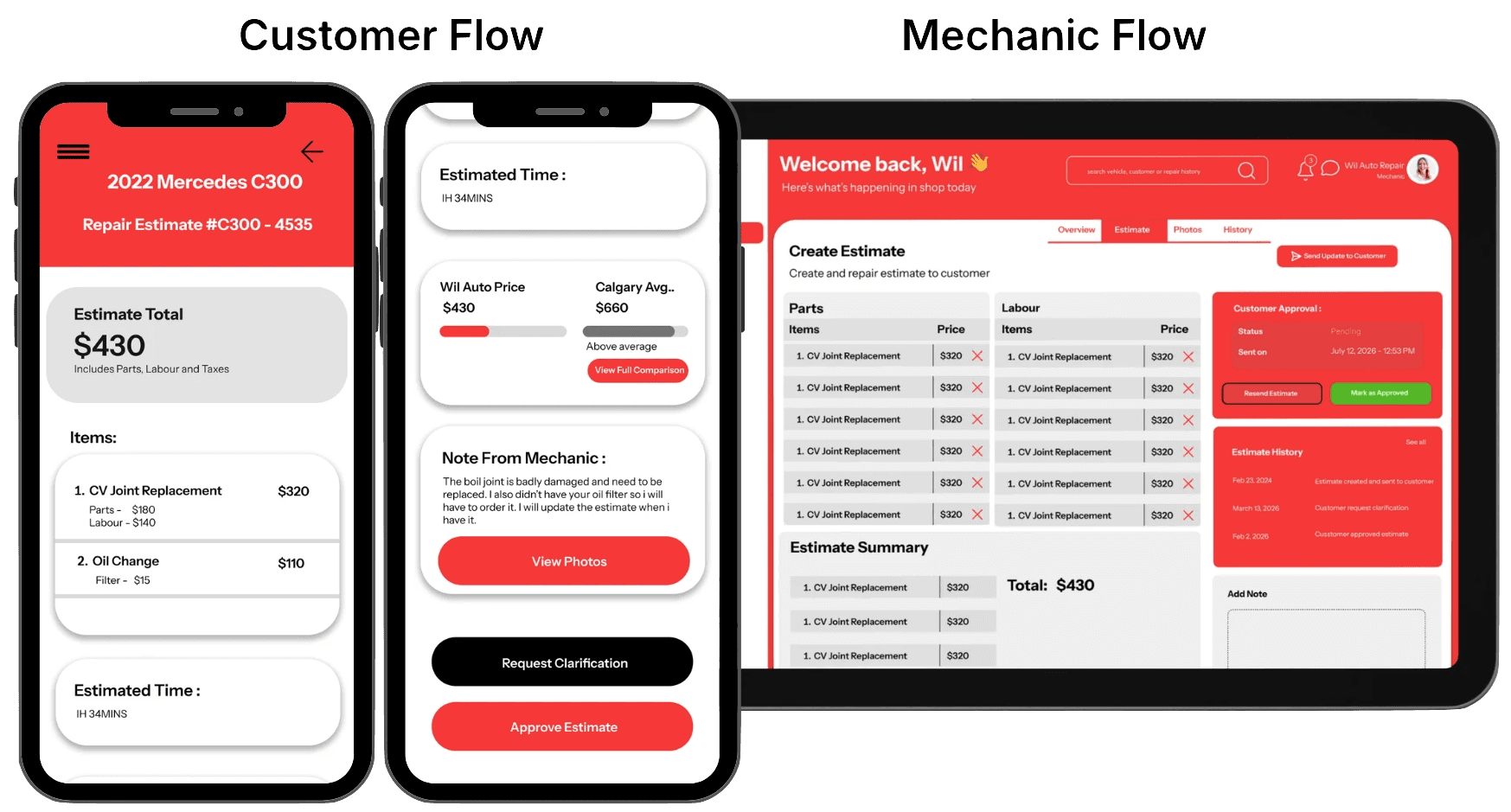
2. Estimate Approval Workflow
Digitized approval system with:
itemized breakdown
repair justification
photo evidence
instant approval flow

Live Chat Messaging Layer
A structured communication system that replaces phone-based updates with contextual, repair-linked messaging.
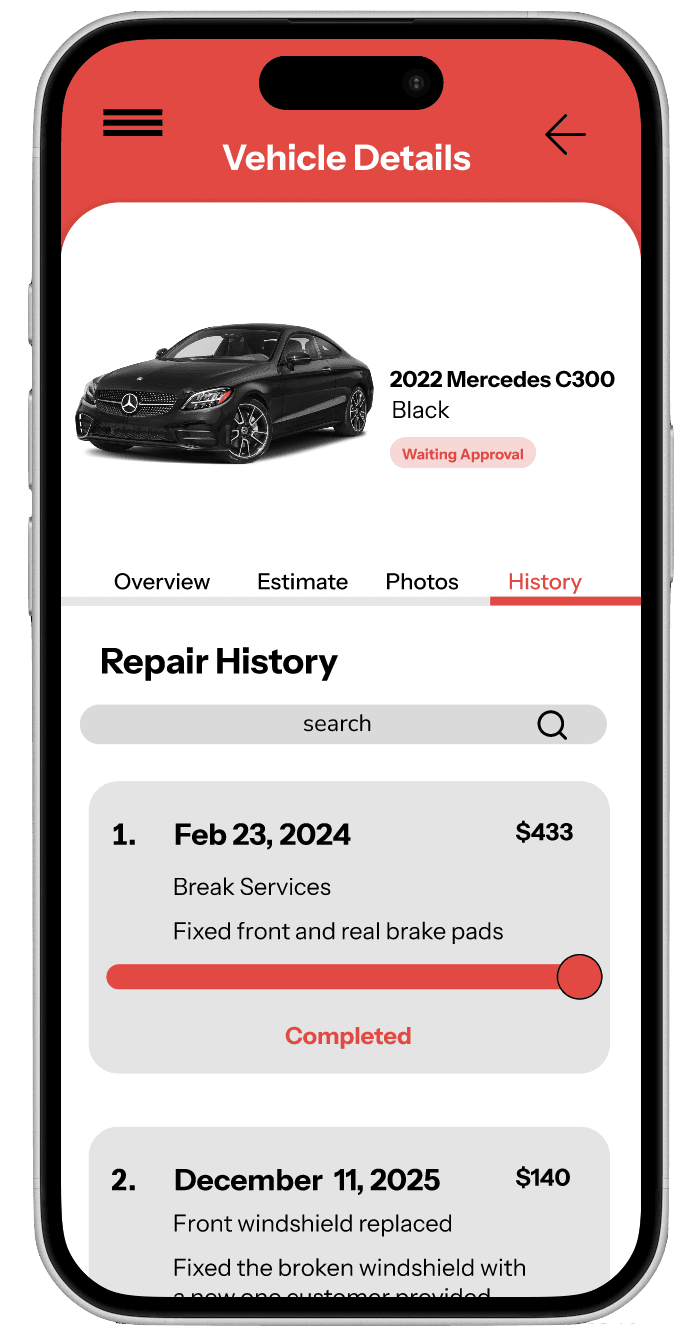
5. Repair History System
A persistent vehicle record that improves long-term service transparency and customer retention.
6. Operations Dashboard
A high-efficiency workspace optimized for:
rapid job scanning
minimal-click status updates
parallel repair tracking
reduced cognitive load for technicians
PRODUCT IMPACT (QUALITATIVE)
Increased transparency and confidence
Reduced anxiety during repair process
Improved understanding of repair stages
Customer Impact
Increased estimate approval efficiency
Reduced inbound status calls
Improved operational focus for technicians
Business Impact
USABILITY TESTING
3 technicians
5 vehicle owners
3 service advisors
PATICIPANTS
100% completion rate: Track repair status
92% completion rate: Approve estimate
100% completion rate: Access repair history
TASK OUTCOMES
Users consistently reported:
reduced uncertainty
improved understanding of repair progress
higher trust in repair updates
less need to contact service centers
QUALITATIVE FEEDBACK
This platform functions as a service orchestration layer between:
Customer expectations
Technician workflow execution
Service advisor coordination
It transforms automotive repair from a reactive communication model into a proactive information system.
FINAL SYSTEM VIEW
This project shifted my thinking from designing interfaces to designing systems of interaction between people, workflows, and data states.
The key insight was that the problem was not UI complexity—it was lack of shared operational truth between stakeholders.
By designing a unified repair state model, it turns a fragmented service experience into a structured, transparent system.
REFLECTION
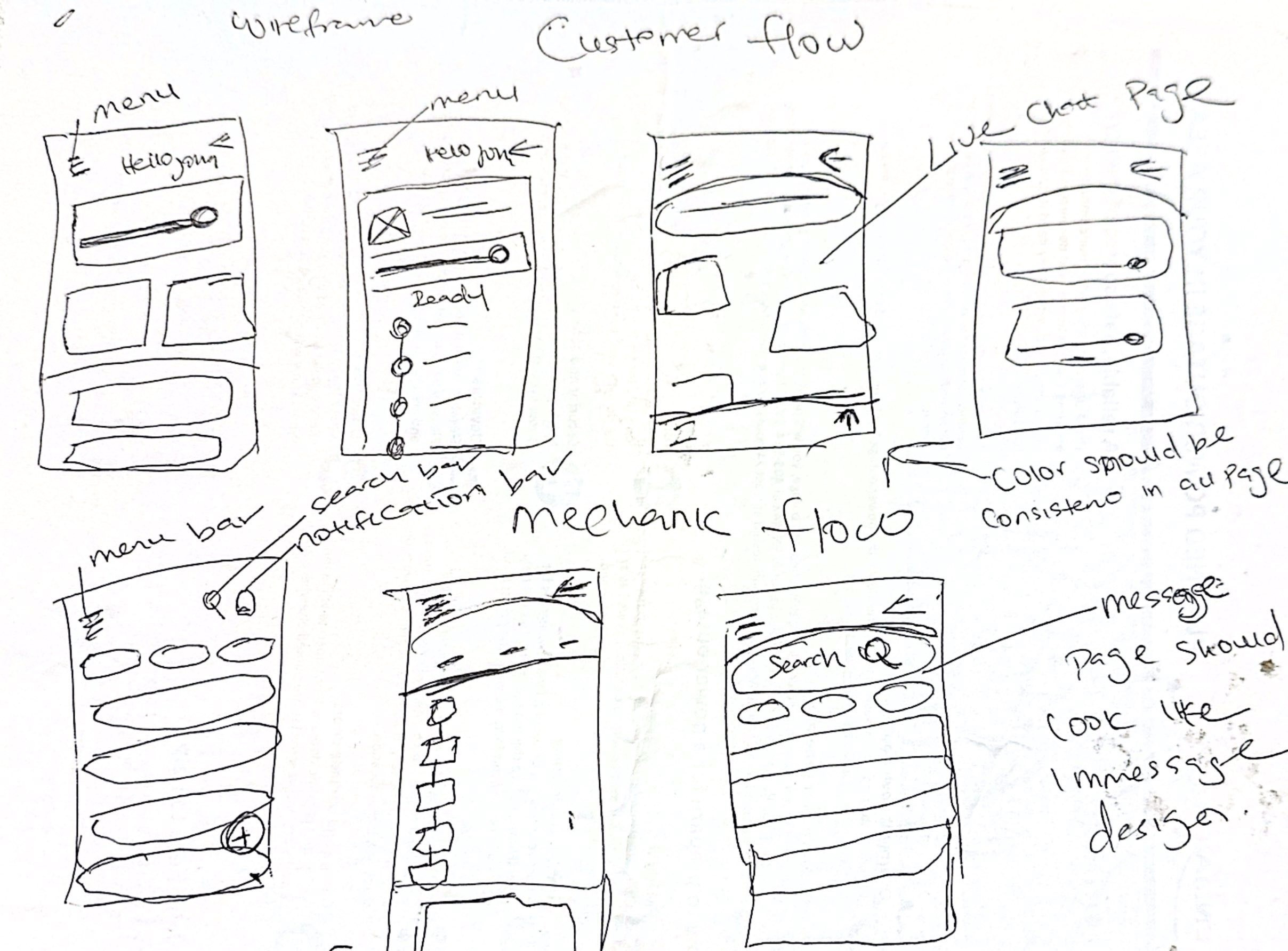
WIREFRAMES
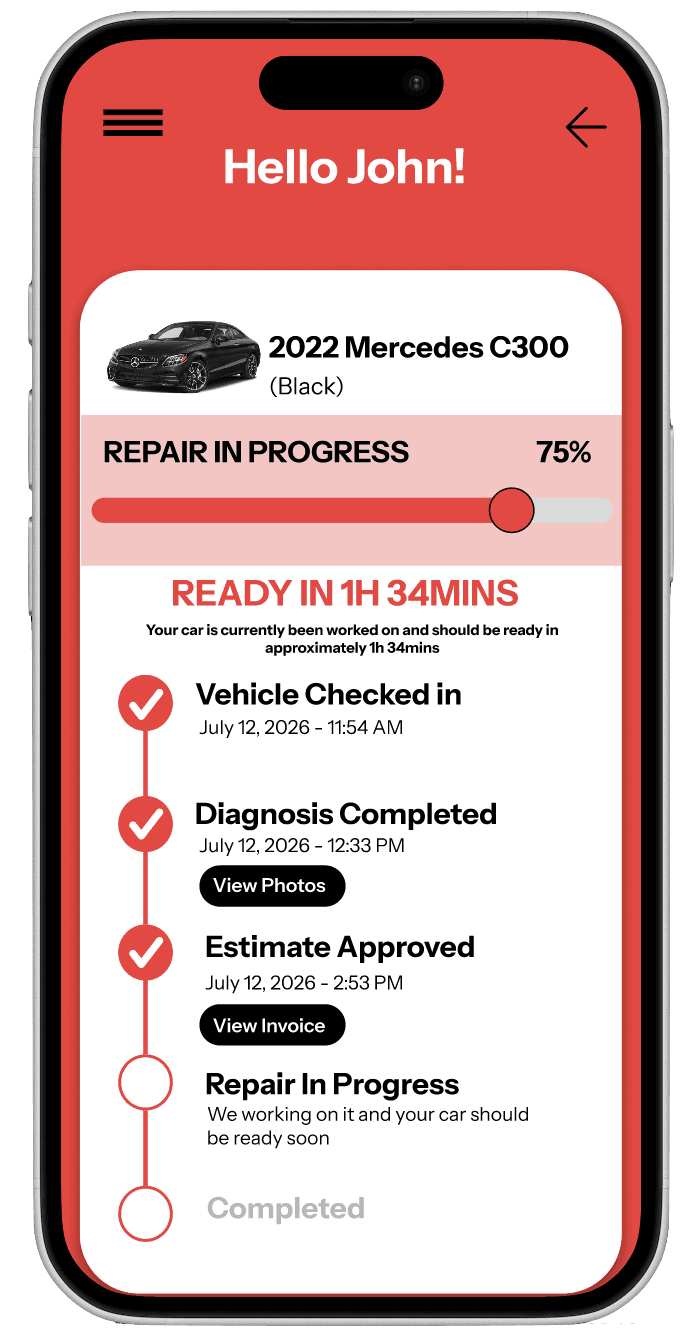
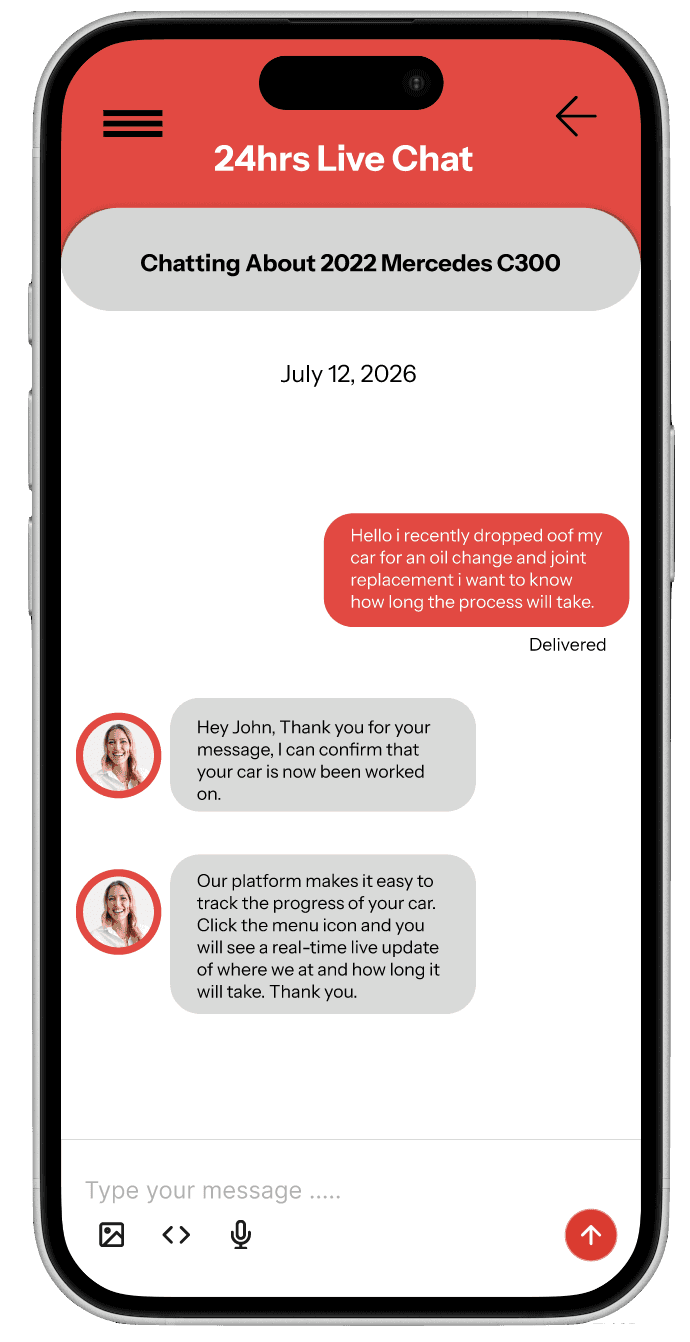
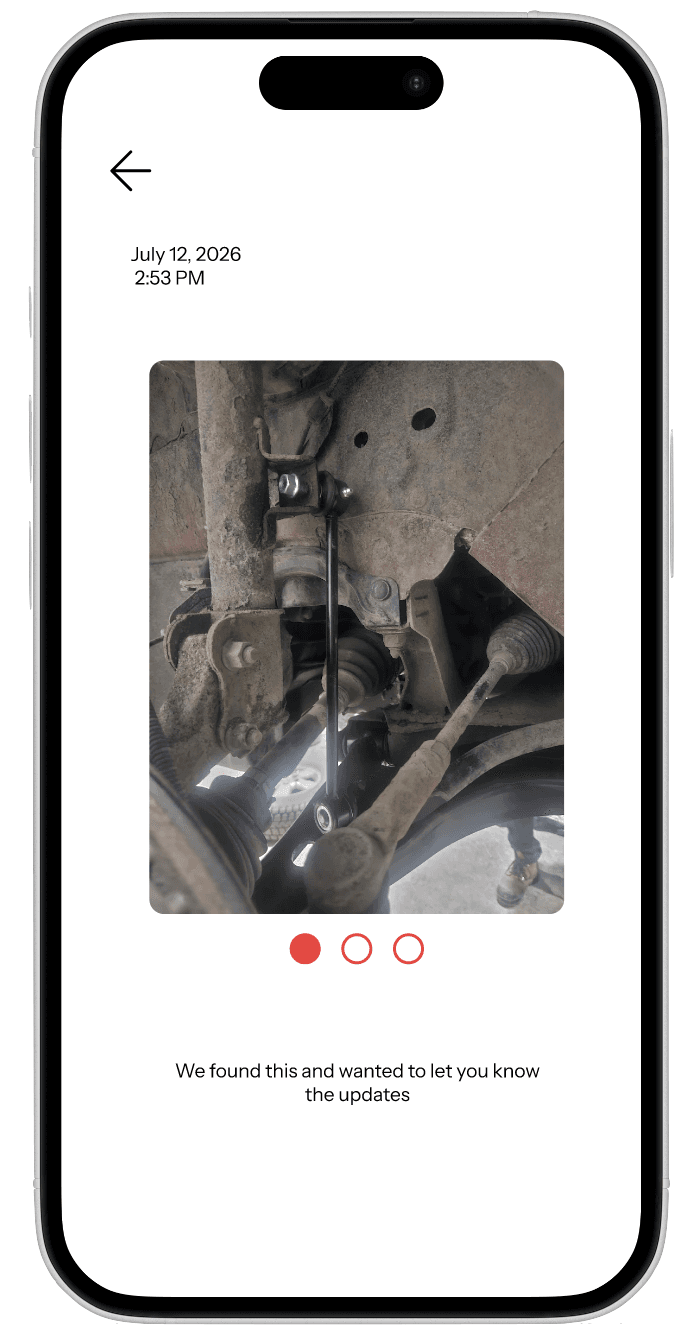
HI-FI MOCKUP CUSTOMER FLOW
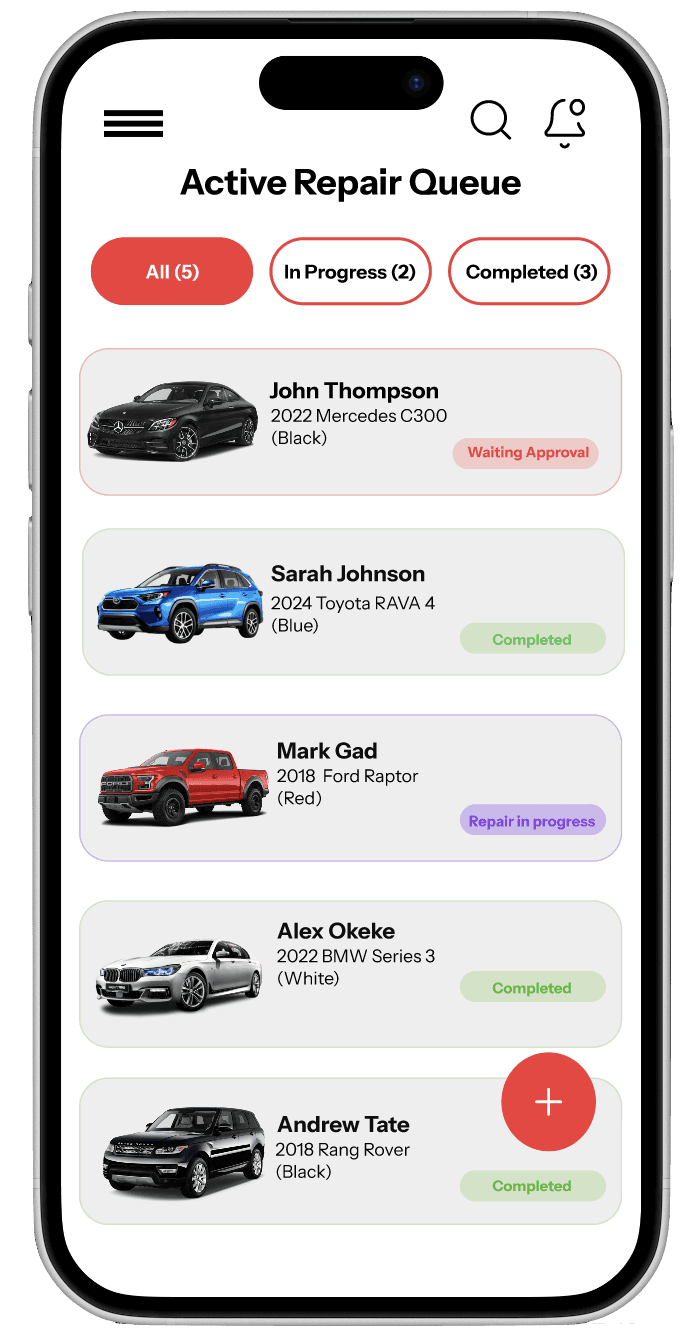
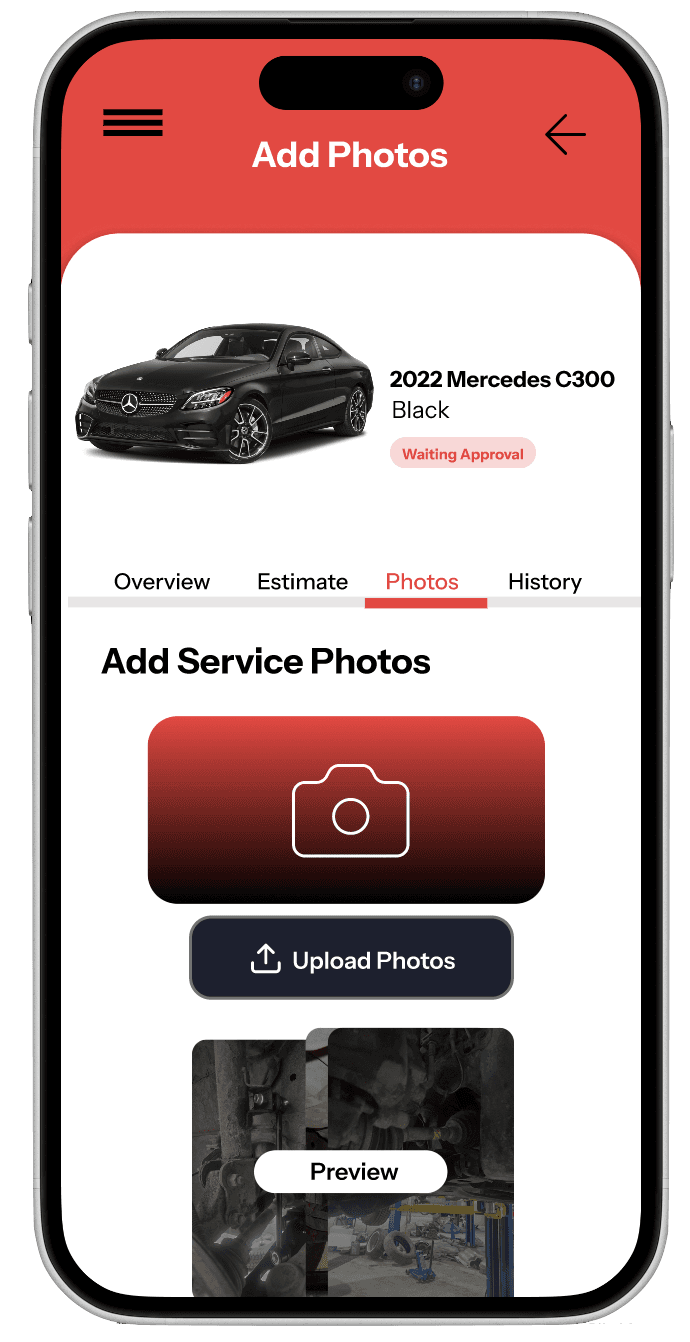
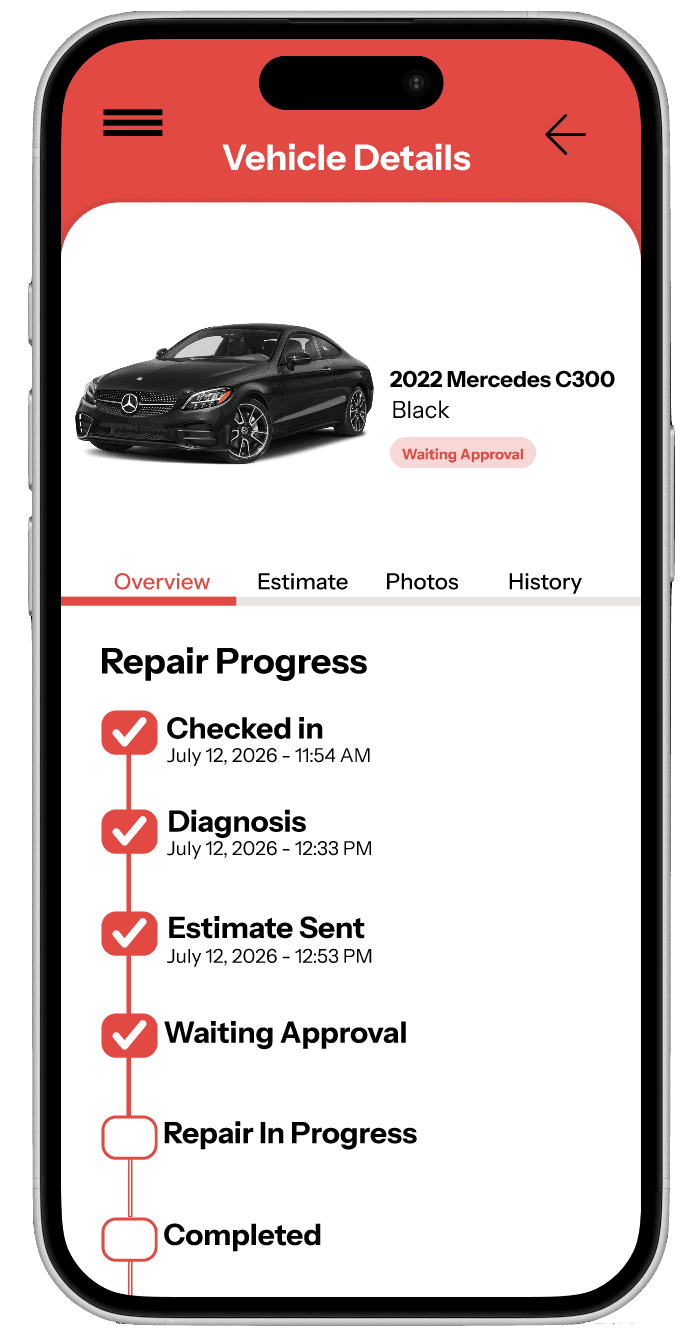

HI-FI MOCKUP MECHANIC FLOW MOBILE VERSION


Prototype available upon request
HI-FI MOCKUP MECHANIC FLOW DESKTOP VERSION


Contact
Let's Get in Touch
Let's connect and start with your project ASAP.
Or email divvytechdesign@gmail.com
Contact
Let's Get in Touch
Let's connect and start with your project ASAP.
Or email divvytechdesign@gmail.com
Contact
Let's Get in Touch
Let's connect and start with your project ASAP.
Or email divvytechdesign@gmail.com
Real-Time Automotive Repair Tracking Platform
A two-sided service operations system that connects vehicle owners and automotive repair teams through a shared real-time repair state model, reducing communication overhead, improving repair transparency, and streamlining workshop workflows.
PRODUCT CONTEXT
Automotive repair is not just a service problem—it is a coordination and information asymmetry problem.
Customers lack visibility into what is happening after vehicle drop-off, while repair teams operate under constant interruptions from status inquiries, manual updates, and fragmented communication channels.
This creates a broken feedback loop between work being done and work being understood.
PROBLEM
Through research with vehicle owners and repair staff, I identified a core systemic issue:
Repair shops and customers operate on two disconnected versions of the same workflow.
Anxiety due to uncertainty
Reliance on phone calls for updates
Surprise costs and unclear timelines
No visibility into repair progress
Customer Experience Issues
Time lost repeating updates
Manual estimate communication
Fragmented repair documentation
Frequent interruptions from status inquiries
Operational Issues (Repair Teams)
OPPORTUNITY
How might we design a shared operational system where both customers and repair teams interact with a single, synchronized repair state?
SOLUTION
This is a real-time repair operations platform built around a unified repair state system.
It consists of two interconnected interfaces:
A transparent interface that allows customers to:
Track real-time repair progress
Review repair milestones
Approve digital estimates
View repair documentation (photos + notes)
Communicate with service teams
Access full vehicle service history
1. Customer Experience Layer
An internal workflow system that enables repair teams to:
Manage repair queue
Update repair stages in real time
Attach repair evidence (photos, notes)
Generate and send estimates
Communicate with customers
Track job progression across workshop capacity
2.Repair Operations Layer (Mechanic Dashboard)
Instead of designing two separate apps, I designed a shared state architecture:
Every action in the mechanic dashboard updates a single source of truth that powers the customer experience in real time.
SYSTEM DESIGN THINKING
Mechanic Action
↓
Repair State Update (Database)
↓
Real-Time Sync Layer
↓
Customer Experience UI
↓
Customer Awareness + Feedback
This ensures both users are always interacting with the same version of reality.
SYSTEM MODEL
PRODUCT STRATEGY
This platform was designed around three core principles:
Customers should never need to “ask” for updates.
1. Transparency by Default
Mechanics should never be interrupted to communicate status updates manually.
2. Workflow Continuity
Visual repair documentation reduces uncertainty and increases estimate approval confidence.
3. Trust Through Evidence
RESEARCH
Workflow interviews (technicians + service advisors)
User interviews (vehicle owners)
Competitive analysis
Service journey mapping
Methodology
The key design challenge was balancing:
Technical workflow complexity (repair operations)
Emotional clarity (customer experience)
Speed of interaction (mechanic efficiency)
This required designing for two completely different mental models within a single system.
DESIGN CHALLENGE
KEY PRODUCT DECISIONS (TRADEOFFS)
Decision:
I chose a linear repair timeline model instead of just list-based task system.
Why:
Repairs follow predictable stages
Customers need clarity, not complexity
Linear structure reduces cognitive load
Tradeoff:
Less flexibility for edge-case repair flows
1. Timeline vs List-Based Status System
Decision:
Implemented real-time state synchronization between dashboard and customer portal.
Why:
Eliminates communication delays
Reduces customer uncertainty
Removes manual refresh dependency
Tradeoff:
Higher system complexity and dependency on reliable syncing
2. Real-Time Updates vs Manual Refresh
Decision:
Built mechanic dashboard as the primary control system, with customer UI as a reflection layer.
Why:
Operational accuracy depends on technician input
Customer experience must mirror real operational state
Tradeoff:
Customer experience is dependent on backend discipline
3. Dashboard-First vs Customer-First Architecture
INFORMATION ARCHITECTURE
Home (Repair Overview)
Live Repair Status
Estimates & Approvals
Messages
Repair History
Customer Portal 1
Active Repair Queue
Job Detail View
Status Management System
Estimate Builder
Communication Hub
Workshop Overview
Repair Operations Dashboard
DESIGN SYSTEM
Primary Color
#F53838 → Trust, control, system clarity
Secondary Color
#FFFFFF → Progress, completion, approval
Neutral Base
#000000→ Operational clarity and focus
USER FLOW
The Customer User Flow follows a linear journey from phone-based login to repair completion, emphasizing real-time transparency, digital estimate approval, and seamless communication to reduce uncertainty and phone calls.
The Mechanic User Flow is designed for operational efficiency, enabling shop staff to quickly manage active repairs, update statuses, upload documentation, send estimates, and communicate with customers from a centralized dashboard and messaging system.
KEY FEATURES
1. Real-Time Repair State System
A synchronized status engine that updates both customer and mechanic views simultaneously.
2. Estimate Approval Workflow
Digitized approval system with:
itemized breakdown
repair justification
photo evidence
instant approval flow
Live Chat Messaging Layer
A structured communication system that replaces phone-based updates with contextual, repair-linked messaging.
5. Repair History System
A persistent vehicle record that improves long-term service transparency and customer retention.
6. Operations Dashboard
A high-efficiency workspace optimized for:
rapid job scanning
minimal-click status updates
parallel repair tracking
reduced cognitive load for technicians
PRODUCT IMPACT (QUALITATIVE)
Increased transparency and confidence
Reduced anxiety during repair process
Improved understanding of repair stages
Customer Impact
Increased estimate approval efficiency
Reduced inbound status calls
Improved operational focus for technicians
Business Impact
USABILITY TESTING
3 technicians
5 vehicle owners
3 service advisors
PATICIPANTS
100% completion rate: Track repair status
92% completion rate: Approve estimate
100% completion rate: Access repair history
TASK OUTCOMES
Users consistently reported:
reduced uncertainty
improved understanding of repair progress
higher trust in repair updates
less need to contact service centers
QUALITATIVE FEEDBACK
This platform functions as a service orchestration layer between:
Customer expectations
Technician workflow execution
Service advisor coordination
It transforms automotive repair from a reactive communication model into a proactive information system.
FINAL SYSTEM VIEW
This project shifted my thinking from designing interfaces to designing systems of interaction between people, workflows, and data states.
The key insight was that the problem was not UI complexity—it was lack of shared operational truth between stakeholders.
By designing a unified repair state model, it turns a fragmented service experience into a structured, transparent system.
REFLECTION
WIREFRAMES
HI-FI MOCKUP CUSTOMER FLOW
HI-FI MOCKUP MECHANIC FLOW MOBILE VERSION
Prototype available upon request
HI-FI MOCKUP MECHANIC FLOW DESKTOP VERSION
Contact
Let's Get in Touch
Let's connect and start with your project ASAP.
Or email divvytechdesign@gmail.com
Contact
Let's Get in Touch
Let's connect and start with your project ASAP.
Or email divvytechdesign@gmail.com
Contact
Let's Get in Touch
Let's connect and start with your project ASAP.
Or email divvytechdesign@gmail.com
Real-Time Automotive Repair Tracking Platform
A two-sided service operations system that connects vehicle owners and automotive repair teams through a shared real-time repair state model, reducing communication overhead, improving repair transparency, and streamlining workshop workflows.
PRODUCT CONTEXT
Automotive repair is not just a service problem—it is a coordination and information asymmetry problem.
Customers lack visibility into what is happening after vehicle drop-off, while repair teams operate under constant interruptions from status inquiries, manual updates, and fragmented communication channels.
This creates a broken feedback loop between work being done and work being understood.
PROBLEM
Through research with vehicle owners and repair staff, I identified a core systemic issue:
Repair shops and customers operate on two disconnected versions of the same workflow.
Anxiety due to uncertainty
Reliance on phone calls for updates
Surprise costs and unclear timelines
No visibility into repair progress
Customer Experience Issues
Time lost repeating updates
Manual estimate communication
Fragmented repair documentation
Frequent interruptions from status inquiries
Operational Issues (Repair Teams)
OPPORTUNITY
How might we design a shared operational system where both customers and repair teams interact with a single, synchronized repair state?
SOLUTION
This is a real-time repair operations platform built around a unified repair state system.
It consists of two interconnected interfaces:
A transparent interface that allows customers to:
Track real-time repair progress
Review repair milestones
Approve digital estimates
View repair documentation (photos + notes)
Communicate with service teams
Access full vehicle service history
1. Customer Experience Layer
An internal workflow system that enables repair teams to:
Manage repair queue
Update repair stages in real time
Attach repair evidence (photos, notes)
Generate and send estimates
Communicate with customers
Track job progression across workshop capacity
2.Repair Operations Layer (Mechanic Dashboard)
Instead of designing two separate apps, I designed a shared state architecture:
Every action in the mechanic dashboard updates a single source of truth that powers the customer experience in real time.
SYSTEM DESIGN THINKING
Mechanic Action
↓
Repair State Update (Database)
↓
Real-Time Sync Layer
↓
Customer Experience UI
↓
Customer Awareness + Feedback
This ensures both users are always interacting with the same version of reality.
SYSTEM MODEL
PRODUCT STRATEGY
This platform was designed around three core principles:
Customers should never need to “ask” for updates.
1. Transparency by Default
Mechanics should never be interrupted to communicate status updates manually.
2. Workflow Continuity
Visual repair documentation reduces uncertainty and increases estimate approval confidence.
3. Trust Through Evidence
RESEARCH
Workflow interviews (technicians + service advisors)
User interviews (vehicle owners)
Competitive analysis
Service journey mapping
Methodology
The key design challenge was balancing:
Technical workflow complexity (repair operations)
Emotional clarity (customer experience)
Speed of interaction (mechanic efficiency)
This required designing for two completely different mental models within a single system.
DESIGN CHALLENGE
KEY PRODUCT DECISIONS (TRADEOFFS)
Decision:
I chose a linear repair timeline model instead of just list-based task system.
Why:
Repairs follow predictable stages
Customers need clarity, not complexity
Linear structure reduces cognitive load
Tradeoff:
Less flexibility for edge-case repair flows
1. Timeline vs List-Based Status System
Decision:
Implemented real-time state synchronization between dashboard and customer portal.
Why:
Eliminates communication delays
Reduces customer uncertainty
Removes manual refresh dependency
Tradeoff:
Higher system complexity and dependency on reliable syncing
2. Real-Time Updates vs Manual Refresh
Decision:
Built mechanic dashboard as the primary control system, with customer UI as a reflection layer.
Why:
Operational accuracy depends on technician input
Customer experience must mirror real operational state
Tradeoff:
Customer experience is dependent on backend discipline
3. Dashboard-First vs Customer-First Architecture
INFORMATION ARCHITECTURE
Home (Repair Overview)
Live Repair Status
Estimates & Approvals
Messages
Repair History
Customer Portal 1
Active Repair Queue
Job Detail View
Status Management System
Estimate Builder
Communication Hub
Workshop Overview
Repair Operations Dashboard
DESIGN SYSTEM
Primary Color
#F53838 → Trust, control, system clarity
Secondary Color
#FFFFFF → Progress, completion, approval
Neutral Base
#000000→ Operational clarity and focus
USER FLOW
The Customer User Flow follows a linear journey from phone-based login to repair completion, emphasizing real-time transparency, digital estimate approval, and seamless communication to reduce uncertainty and phone calls.
The Mechanic User Flow is designed for operational efficiency, enabling shop staff to quickly manage active repairs, update statuses, upload documentation, send estimates, and communicate with customers from a centralized dashboard and messaging system.
KEY FEATURES
1. Real-Time Repair State System
A synchronized status engine that updates both customer and mechanic views simultaneously.
2. Estimate Approval Workflow
Digitized approval system with:
itemized breakdown
repair justification
photo evidence
instant approval flow
Live Chat Messaging Layer
A structured communication system that replaces phone-based updates with contextual, repair-linked messaging.
5. Repair History System
A persistent vehicle record that improves long-term service transparency and customer retention.
6. Operations Dashboard
A high-efficiency workspace optimized for:
rapid job scanning
minimal-click status updates
parallel repair tracking
reduced cognitive load for technicians
PRODUCT IMPACT (QUALITATIVE)
Increased transparency and confidence
Reduced anxiety during repair process
Improved understanding of repair stages
Customer Impact
Increased estimate approval efficiency
Reduced inbound status calls
Improved operational focus for technicians
Business Impact
USABILITY TESTING
3 technicians
5 vehicle owners
3 service advisors
PATICIPANTS
100% completion rate: Track repair status
92% completion rate: Approve estimate
100% completion rate: Access repair history
TASK OUTCOMES
Users consistently reported:
reduced uncertainty
improved understanding of repair progress
higher trust in repair updates
less need to contact service centers
QUALITATIVE FEEDBACK
This platform functions as a service orchestration layer between:
Customer expectations
Technician workflow execution
Service advisor coordination
It transforms automotive repair from a reactive communication model into a proactive information system.
FINAL SYSTEM VIEW
This project shifted my thinking from designing interfaces to designing systems of interaction between people, workflows, and data states.
The key insight was that the problem was not UI complexity—it was lack of shared operational truth between stakeholders.
By designing a unified repair state model, it turns a fragmented service experience into a structured, transparent system.
REFLECTION
WIREFRAMES
HI-FI MOCKUP CUSTOMER FLOW
HI-FI MOCKUP MECHANIC FLOW MOBILE VERSION
Prototype available upon request
HI-FI MOCKUP MECHANIC FLOW DESKTOP VERSION
Contact
Let's Get in Touch
Let's connect and start with your project ASAP.
Or email divvytechdesign@gmail.com
Contact
Let's Get in Touch
Let's connect and start with your project ASAP.
Or email divvytechdesign@gmail.com
Contact
Let's Get in Touch
Let's connect and start with your project ASAP.
Or email divvytechdesign@gmail.com